
Moab in November: A 12-Part Series
Planning a trip to Moab in November means dealing with a desert that changes fast from season to season. Weather, crowd levels, trail conditions, and even park rules can look completely different depending on when you visit. This 12-Part Series breaks down what Moab is really like month by month so you can plan with confidence instead of guesswork.
Below you’ll find practical details on weather, what’s open, photography conditions, and how these factors shape your time in the parks. Whether you’re chasing sunrise light in Arches or heading out for longer hikes in Canyonlands, this month-specific guide gives you a clear picture of what to expect and how to make the most of your trip.
Table of Contents
Moab in November
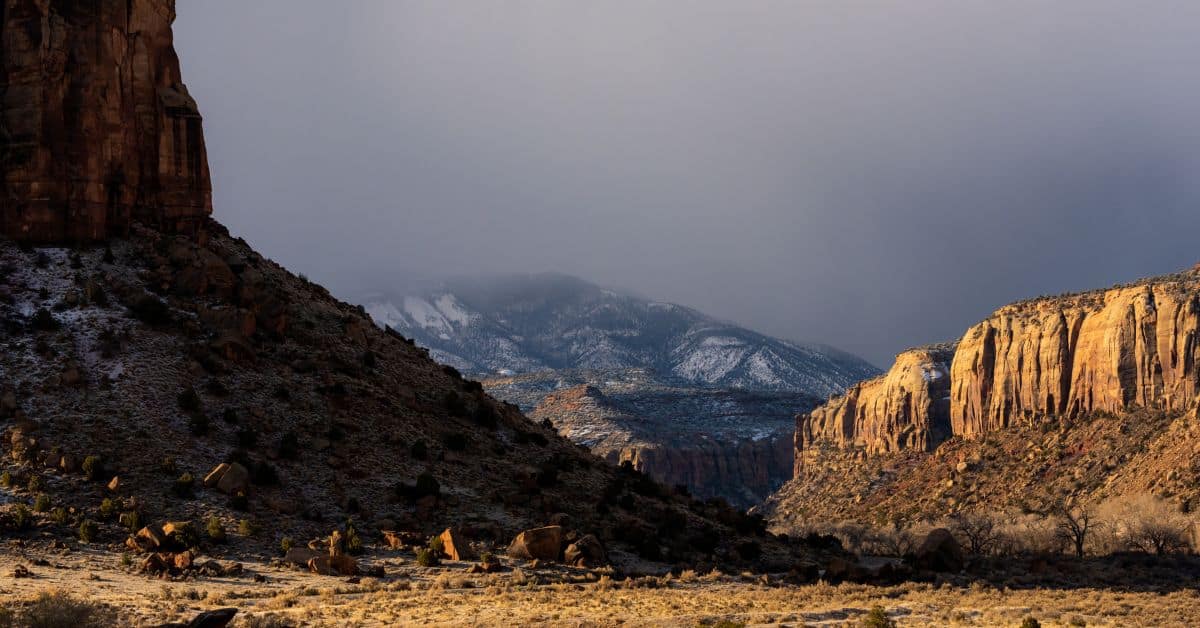
Moab in November feels like a slow exhale after the fall rush. Cool days, cold nights, and quieter trails make Moab in November a sweet spot for those who prefer layers and solitude.
Weather in November
Average highs drop into the mid 50s °F, with lows around the high 20s °F. Light snow is possible later in the month, though many days remain dry and clear.
Daylength is noticeably shorter, with early sunsets and long evenings.
- Hiking: Cool to cold, but usually comfortable with good layers.
- Driving: Mostly dry roads, with occasional snow or ice after storms.
- Photography: Low sun angle, soft light, and quiet overlooks.
What’s Open in November
Operations wind down slightly.
- Arches: Timed entry ends after October 31, returning to unrestricted entry (subject to future policy changes). The park is open 24 hours. All main roads and trails remain open, barring temporary weather closures.
- Canyonlands: Open year round. Some visitor centers move to reduced winter hours or partial closures later in the month, but the park and main roads remain open.
- State parks and town: Dead Horse Point stays open. Some restaurants and tour operators switch to shorter hours or close temporarily for the season.
Crowd Levels in November
Moab in November is a shoulder to off season month.
- Early November can still feel moderately busy, especially around holidays.
- By late November, many days feel quiet, especially midweek.
Photo Plan for Moab in November
November is about subtle color and peaceful scenes.
Key November subjects
- Bare cottonwoods and late color remnants
- River corridors may hold a few lingering golden leaves early in the month, then transition to clean lines of bare branches against red rock.
- Low angle light all day
- The sun’s path is so low that even midday has decent texture and less harsh contrast.
- Early winter storms
- Photogenic mix of snow on La Sals and clear red rock below.
Daylight plan for Moab in November
- Sunrise:
- Dead Horse Point or Island in the Sky for soft canyon light.
- Windows or Park Avenue for low angle illumination.
- Daytime:
- Long hikes like Chesler Park or Syncline Loop are pleasantly cool, but short days mean you must start early.
- Devils Garden is excellent in cool air.
- Sunset:
- Delicate Arch, Balanced Rock, or Grand View Point.
- Blue hour can be especially rich in November.
- Night:
- Focus on star fields and long star trail work, since the Milky Way core is no longer a central feature.
Recommended gear
- Standard lens kit and tripod
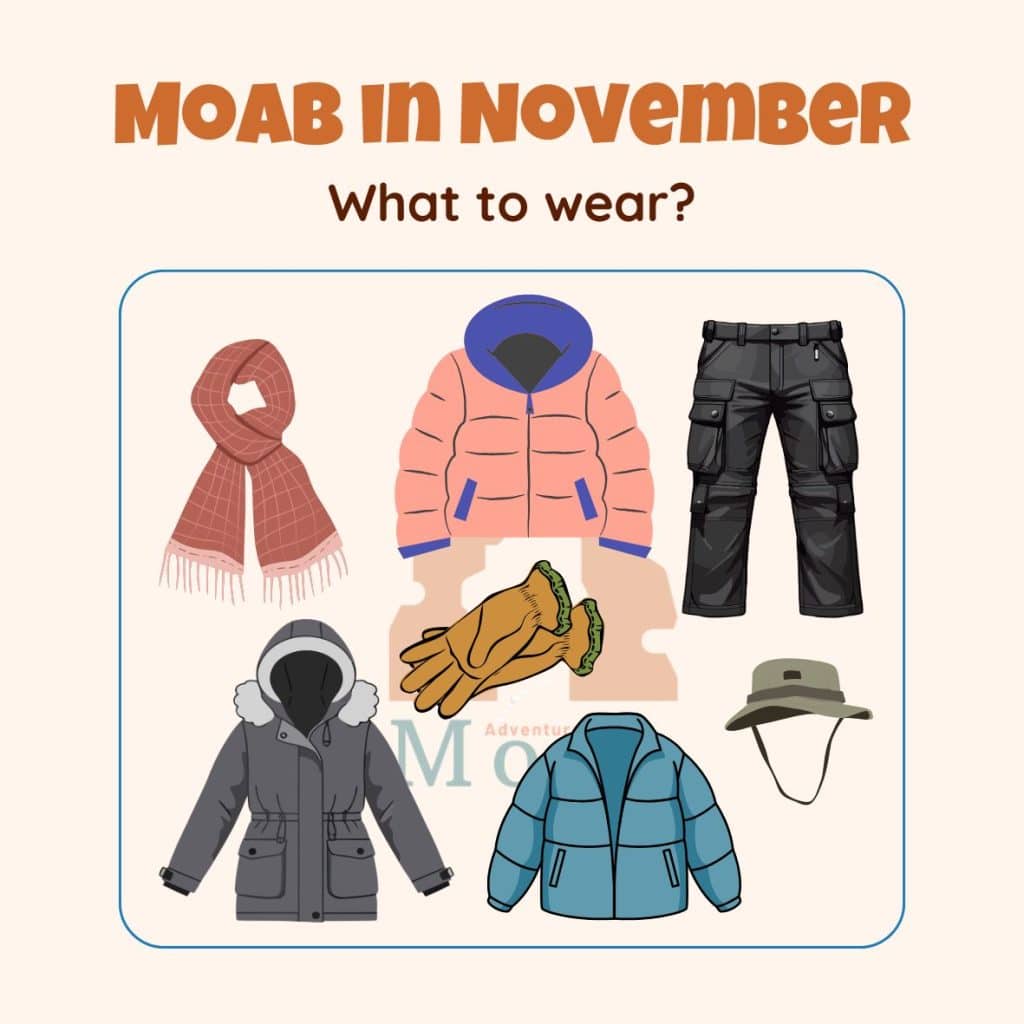
- Warm clothing for dawn, dusk, and night
- Extra batteries, which drain faster in cold temperatures
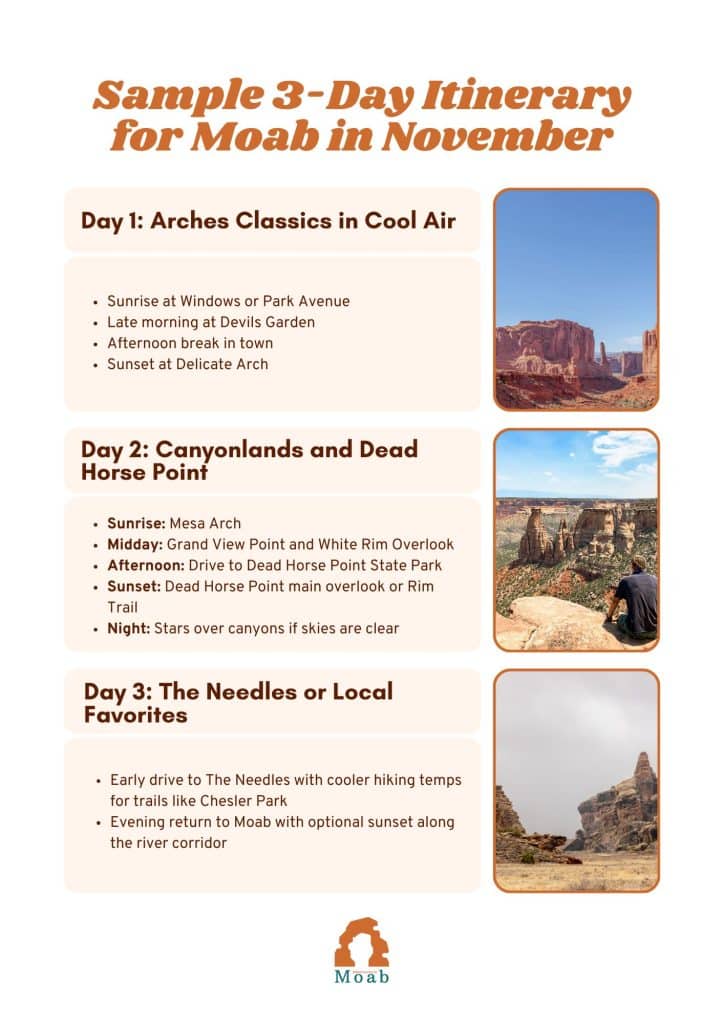
Sample 3-Day Itinerary for November
Packing and Gear List for November
- Cold weather layers with flexibility for 20s to 50s °F
- Warm hat, gloves, and spare socks
- 2 to 3 liters of water capacity (you still need hydration even in cold)
- Thermos for hot drinks during sunrise and sunset shoots
Safety and Road Conditions in November
- Short days make timing important. Always carry a headlamp and maps for longer hikes.
- Early season snow and ice can appear on shaded trails and canyon edges. Consider traction devices later in the month.
- Some remote or unpaved roads may become muddy or icy after storms, so check conditions before committing.
Visit Moab in November
Visiting Moab in November comes with its own mix of challenges and rewards, and knowing what the month brings helps you travel smarter, safer, and with better photos to show for it. Use this guide as your starting point, then build an itinerary that matches your comfort level, the weather, and the type of adventure you want most.
If you’re still deciding when to visit, or you want to compare conditions across the seasons, check out the other articles in the series. Each guide breaks down the same key details so you can quickly see how the desert shifts from winter to spring, summer, and fall. Exploring a few different months will help you pick the perfect time for your next Moab trip.
If you’re still choosing the perfect season for your trip, take a look at the other guides in this series.