
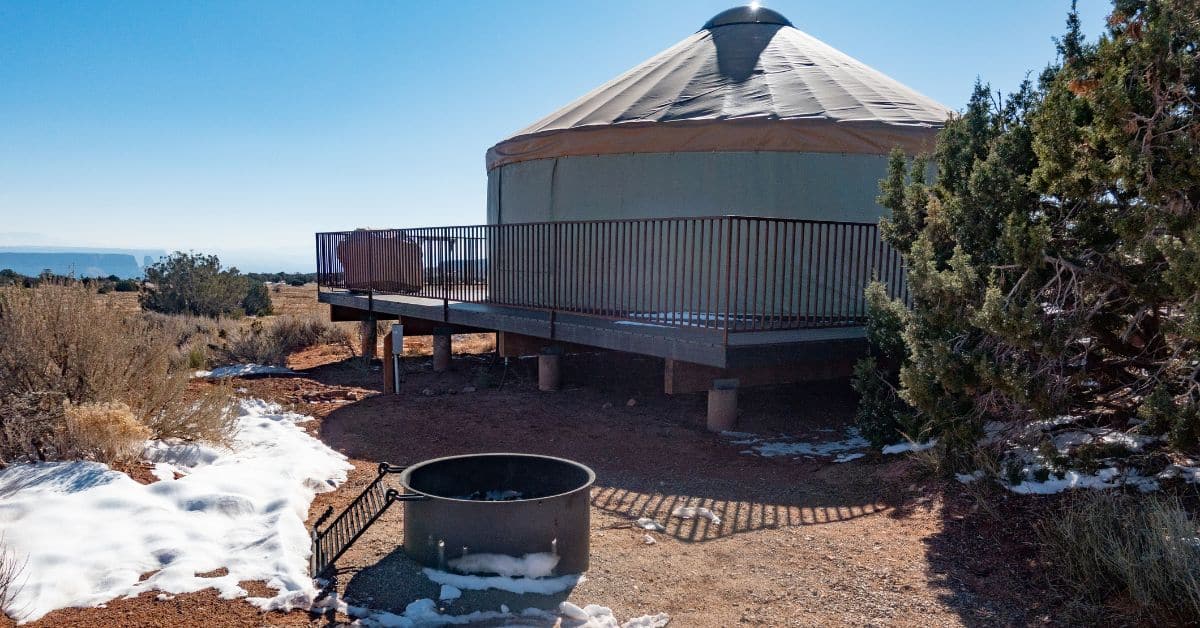
Dead Horse Point Yurts Under The Night Sky
If you’re searching for Dead Horse Point yurts, you’re probably after two things: an easy base near Moab and a front-row seat to canyon country sunsets and stars. Dead Horse Point State Park delivers both, with yurts perched on a high desert mesa above the Colorado River.
This is glamping the Utah way: simple, practical comfort in a place where wind, darkness, and big temperature swings are part of the experience. Below is how to book smart, camp politely, and plan a night-sky session you’ll actually enjoy (and photograph).
Table of Contents
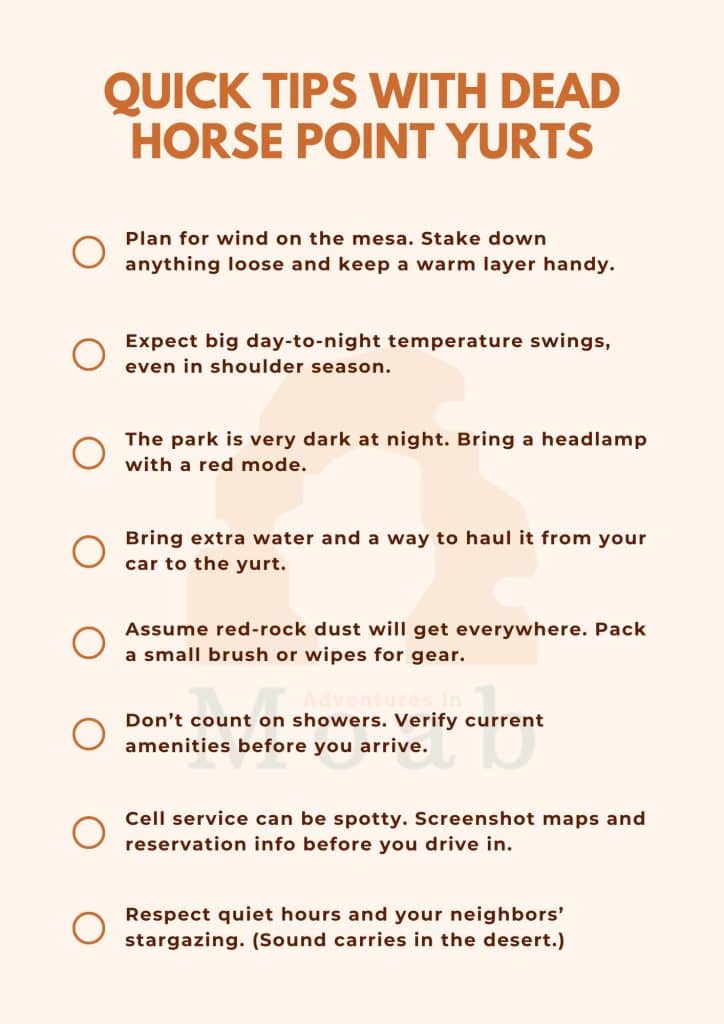
Quick Tips
Booking
How to Reserve (And Where):
Dead Horse Point State Park yurts are typically booked through the Utah State Parks reservation system (often via ReserveAmerica). Start with the official park listings and reservation portal and cross-check the yurt loop you want (Wingate vs. Moenkopi). The park’s main page also points to yurt options.
Best Seasons for Yurt Stays:
- Spring and fall are the sweet spot for most travelers: comfortable hiking weather, great golden-hour light, and crisp nights for sleeping.
- Summer brings heat and strong sun exposure; plan midday downtime and hydrate aggressively.
- Winter can be quiet and beautiful, but nights are cold and weather can change fast on the mesa. (If you’re driving in from Moab, watch for icy patches and wind.)
What to Know Before You Book:
- These yurts are popular. If your dates matter (new moon weekends for astrophotography, school breaks, long weekends), book as early as the system allows and stay flexible on weekday arrivals.
- Don’t assume every yurt is identical. Pet policies and included items can vary by loop and unit—double-check the specific yurt listing for your site before paying.
- Campground amenities can change. For example, the campground details page notes no showers at Dead Horse Point State Park—confirm current facilities before you arrive.
What to Bring (Booking-Minded Essentials):
- A cooler (even if your yurt has a small fridge, you’ll want backup space).
- A lantern/headlamp (the walk to restrooms can be pitch-black).
- A wind-proof layer and a warm hat for night sky time.
- A sleep mask if you’re sensitive to the early sunrise glow.
Pets
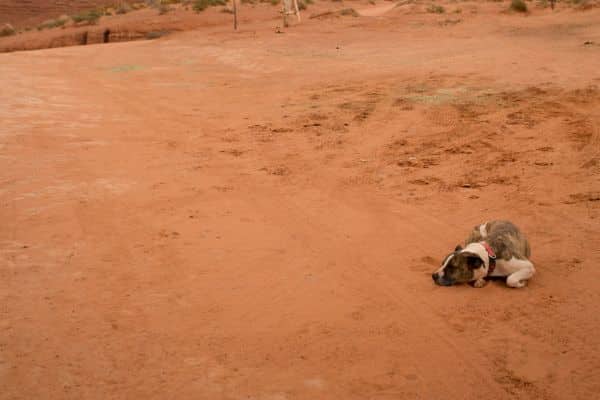
The big rule: Pets are not allowed in the Wingate yurts (service animals are the exception). For other yurt areas, pet rules can differ by site listing (some yurt listings warn that dogs may be allowed in certain yurts). Because of that inconsistency, treat the specific yurt’s reservation page as the final word.
Practical Tips for Desert Camping With Pets (if your booking allows them):
- Heat and exposure: desert sun is intense. Bring a shade option for daytime (even a simple tarp) and never assume the ground is safe for paws in summer afternoons.
- Water, always: carry more than you think you need. The air is dry and dogs dehydrate fast.
- Leash etiquette: Utah State Parks generally require pets to be leashed. Keep the leash short near cliff edges and trail overlooks.
- No “leave them in the car” plan: even mild days can turn a vehicle dangerous quickly in direct sun; park guidance emphasizes attending pets at all times.
Quiet hours etiquette (you’ll appreciate it too): Quiet hours are typically 10 pm to 7 am at Utah State Parks. Keep voices low, avoid idling cars, and don’t let pets bark through the night—sound carries far in open desert.
Astro Plan
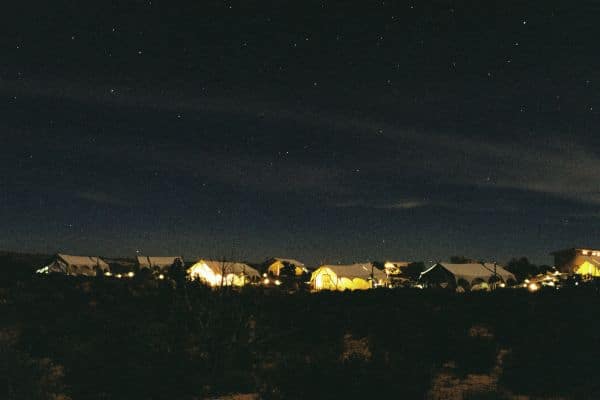
Dead Horse Point State Park is officially designated an International Dark Sky Park (2016), which is exactly why photographers and stargazers love pairing the yurts with a night-sky session.
Simple Night-Sky Plan (For Couples, Families, and Shooters)
1) Choose your window
- Best viewing: aim for new moon or the few nights around it for the most stars and Milky Way contrast.
- Best time of night: start after full darkness, then expect the sky to look even better later as your eyes adjust. (Plan at least 20 minutes with no white light.)
2) Pack the right stuff
- Headlamp with red mode (or red tape over the lens)
- Warm layer, beanie, light gloves (nights can feel cold, even after a hot day)
- Small ground mat or camp chair
- Star app (download maps offline)
- Thermos or hot drink for longer sessions
- Lens cloth (dust + temperature changes = smudges)
3) Basic stargazing tips
- Let your eyes adjust. Keep phone brightness low.
- Scan the sky, then pick one area to focus on (constellations first, then satellites, then faint star clusters).
- If you’re with kids, make it a game: “find the brightest star,” “count shooting stars,” “spot the airplane.”
How to Photograph Stars With a Phone
- Use Night Mode if your phone has it.
- Stabilize it: mini tripod is best; otherwise, brace on a picnic table or a rock (use a jacket as padding).
- Use a timer (3–10 seconds) so you don’t shake the shot tapping the screen.
- Take multiple frames. Desert wind can ruin the sharpest one, so give yourself options.
How to Photograph Stars With a Camera
- Tripod + remote or 2-second timer.
- Start with a wide lens if you have it.
- A common starting point: wide open aperture, 10–20 seconds, moderate-high ISO (adjust based on your lens and sky brightness).
- Focus manually on a bright star (zoom in on live view if you can).
- If wind is strong, hang a little weight from the tripod center or drop the tripod lower.
What The Yurts Are Like
Think “solid shelter + real bed platforms” more than “boutique hotel.” The comfort comes from being off the ground, out of the wind, and able to warm up or cool down without fuss.
Layout and comfort (typical expectations):
- Expect furnished sleeping setups designed for small groups (often a mix like bunks + a futon in some yurts—confirm your exact unit listing).
- Tables inside/outside are commonly provided.
- You’ll still want your own bedding. Even when a yurt has HVAC, desert nights can feel chilly.
Heating/cooling considerations:
Some Dead Horse Point yurts are described as having heating and air conditioning.
Practical take: plan for comfort but don’t treat it like a sealed hotel room. Wind can howl, doors open constantly, and the temperature can swing hard between sunset and dawn.
Power and lighting (state assumptions clearly):
- Certain yurt listings note electrical outlets and provided propane for the yurt setup.
- Don’t assume you can run high-draw appliances. Keep it simple: charge phones/camera batteries, run small lights, maybe a fan if provided.
- Bring a lantern anyway. The ambient darkness out here is real, and yurt lighting can feel dim when you’re organizing gear at night.
Bathrooms/showers: Campground info indicates flush toilets are available and that there are no showers at the park (confirm current details before you arrive).
Nearby Highlights
Sunrise/sunset viewpoints:
- The park is famous for its overlooks above the river bends. Sunset is the headline, but sunrise can be quieter and just as photogenic when the canyon walls start glowing.
- Expect wind at the rim and fast-changing light. Bring a layer even if you were sweating in Moab an hour earlier.
Short hikes right from camp: Modern campground areas connect easily to trails and viewpoints, making it realistic to do a quick walk before breakfast or after dinner without driving anywhere.
Moab proximity (and why it matters): You’re close enough to use Moab for groceries, ice, and a real meal, but the park feels removed once you’re up on the mesa. That separation is part of what protects the night sky and makes the stars pop.
Responsible recreation (especially in fragile desert):
- Stay on trails and durable surfaces. Desert soils and cryptobiotic crust don’t bounce back quickly.
- Pack out trash (including micro-trash like bottle caps and wrappers).
- Keep headlights low and avoid sweeping bright lights across camps at night—your neighbors may be doing astrophotography.
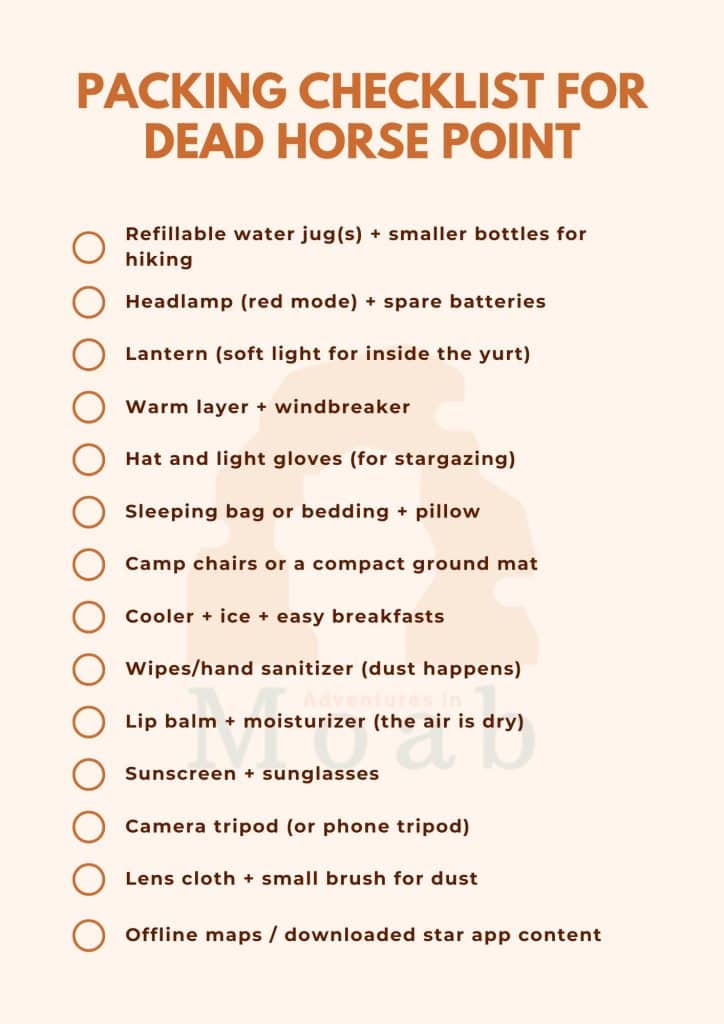
Packing Checklist
Find a Low-Stress Base near Moab
If you want a low-stress base near Moab with real darkness overhead, Dead Horse Point yurts are one of the most straightforward ways to do it.
Book early, double-check the official reservation listing for the exact yurt you’re choosing (amenities and pet rules can vary), and plan for the realities of the high desert: wind, dust, and temperature swings. Then do the simple thing that makes this stay special—turn off the white lights, step outside, and look up.
Dead Horse Point Yurts FAQs
Where are the Dead Horse Point yurts located?
They’re within Dead Horse Point State Park, with yurts associated with campground areas like Wingate and Moenkopi. Start on the park’s official site and then confirm your specific yurt loop on the reservation listing.
Do the yurts have electricity and climate control?
Some official yurt descriptions mention electrical outlets plus heating and air conditioning (details can vary by yurt). Always verify your exact unit on the official listing.
Are there showers at the yurt campground?
Campground details indicate no showers at Dead Horse Point State Park. Verify current amenities on the official campground details page before you go.
Can I bring my dog?
Pets are not allowed in the Wingate yurts (service animals are an exception). Other yurt listings may differ, so check your specific yurt’s reservation page for the current rule.
Is this a good place for stargazing?
Yes. Dead Horse Point State Park is an International Dark Sky Park (designated in 2016), and its open horizons make it a standout near Moab for night skies.