
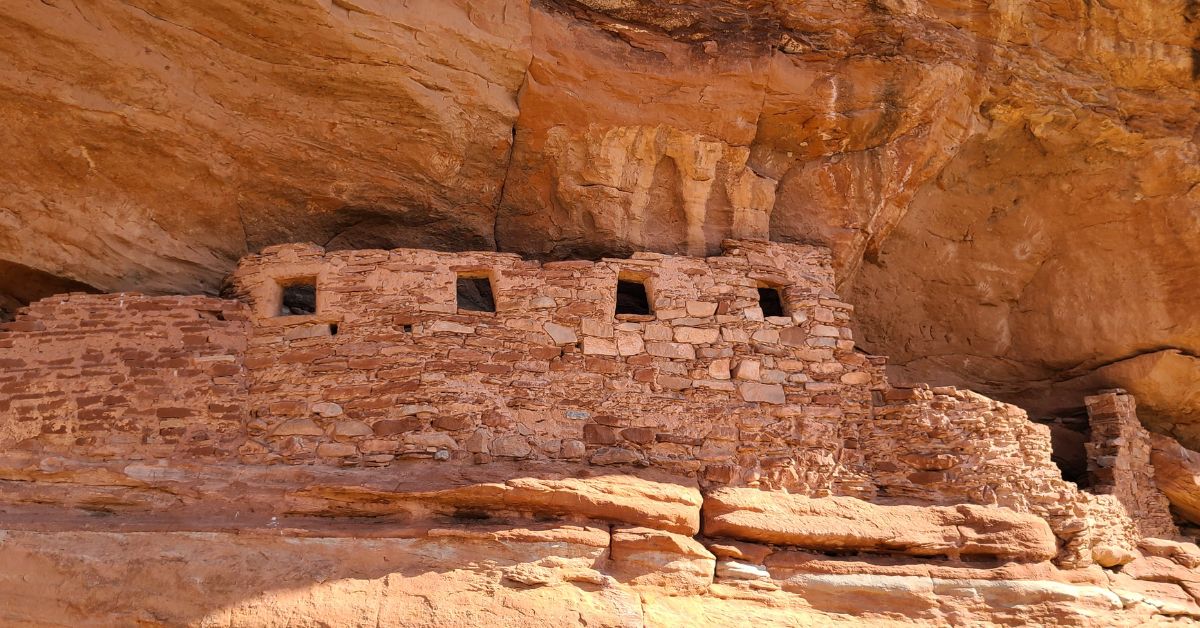
Bears Ears Visit With Respect: Smart Travel Tips for a Fragile Landscape
Bears Ears is a vast, rugged landscape of canyons, mesas, and cultural sites spread across remote public lands in southeast Utah. It’s also a place where small actions add up fast: a bootprint in fragile soil, a touched handprint on a rock wall, a shortcut that becomes a new trail.
If you want to Bears Ears visit respectfully, plan for slow travel, stick to durable routes, and treat every site and view as something you’re borrowing, not using up. The goal is simple: protect what’s irreplaceable so the next person can feel the same sense of discovery.
Bears Ears has deep Indigenous connections and ongoing significance to multiple Tribes. Visitors can honor that reality without speaking for anyone: approach with humility, listen when Indigenous organizations and local partners share guidance, and remember that what looks like “ruins” or “art” to you may be part of a living cultural landscape.
Table of Contents
Bears Ears: Visit with Respect
Respect here is practical, not performative. It looks like driving slowly on washboard roads, keeping groups small around sensitive places, and choosing not to “improve” a campsite or cairn a route just because it seems helpful.
A few ground rules make everything else easier:
- Treat the land and its stories as non-renewable.
- Expect fewer signs, fewer facilities, and more personal responsibility than in a national park.
- When you’re unsure, default to the least-impact option and check current rules with the managing agency before you go.
Visit Respectfully, With The Right Mindset
This isn’t about being perfect. It’s about being careful in a place where damage can last for decades.
Bring the right mindset:
- You don’t need to “find everything.” Enjoy fewer stops, spend more time at each, and skip anything that feels crowded or uncertain.
- Think “hands off, eyes on.” Photos are great; handling is not.
- Share space kindly. If another group is at a site, consider moving on and returning later.
Know who manages what: Bears Ears National Monument is managed by the Bureau of Land Management (BLM) and the U.S. Forest Service (Manti–La Sal National Forest), working with the Bears Ears Commission representing five Tribes. Rules can vary by location and land manager, so it’s worth checking details for your specific area.
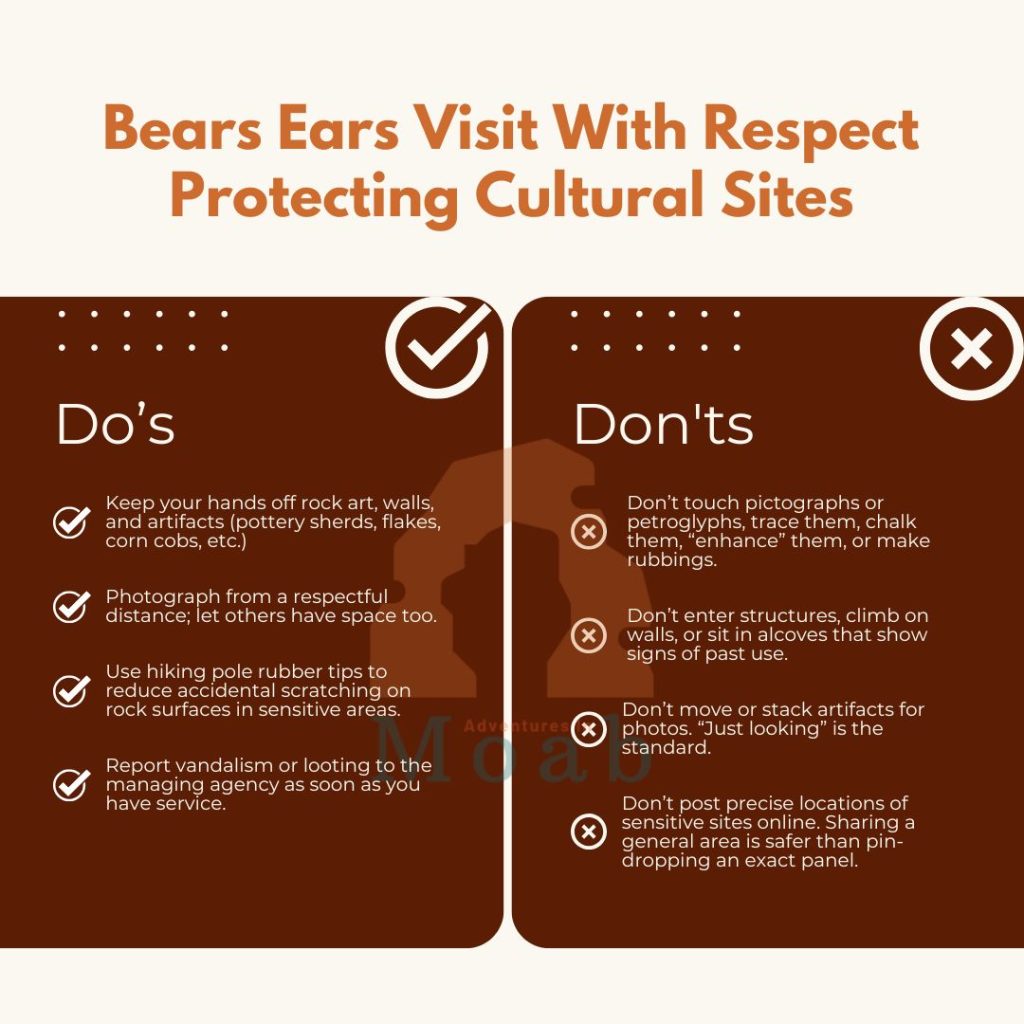
Protecting Cultural Sites
Many visitors come for rock art, granaries, and ancient structures. These places are extraordinarily fragile. Even clean hands can damage rock imagery over time, and leaning on walls can loosen stone that’s been stable for centuries.
Stay on Durable Surfaces
In desert country, “it’ll grow back” is often wishful thinking. Cryptobiotic soil crust (that knobby, dark living layer on the ground) helps prevent erosion and supports plant life, but it can take decades to recover after a single set of footprints.
- Travel on existing trails, slickrock, dry washes (when appropriate), and other durable surfaces.
- Avoid cutting switchbacks or making “social trails,” especially near popular viewpoints and sites.
- If you’re exploring cross-country, spread out your group and step on rock or bare mineral soil whenever possible.
Permits
Permits and fees in the Bears Ears region can be area-specific and can change. The safest approach is to match your plan to the exact place you’re going and confirm current requirements with the managing agency before you leave home.
A few common examples to research for your itinerary:
- Backpacking permits: Some well-known canyons on Cedar Mesa (including the Grand Gulch area) use a permit system, often handled through Recreation.gov. Check current quotas, group size limits, and seasonal details.
- Day-use fees at certain trailheads: Some trailheads/canyon systems in the broader Bears Ears/Cedar Mesa area have self-pay day-use fees or passes. Confirm current fee areas and payment methods before you go.
If you’re unsure where your route crosses BLM vs. Forest Service lands, look up current maps and visitor info on official pages and local partner resources.
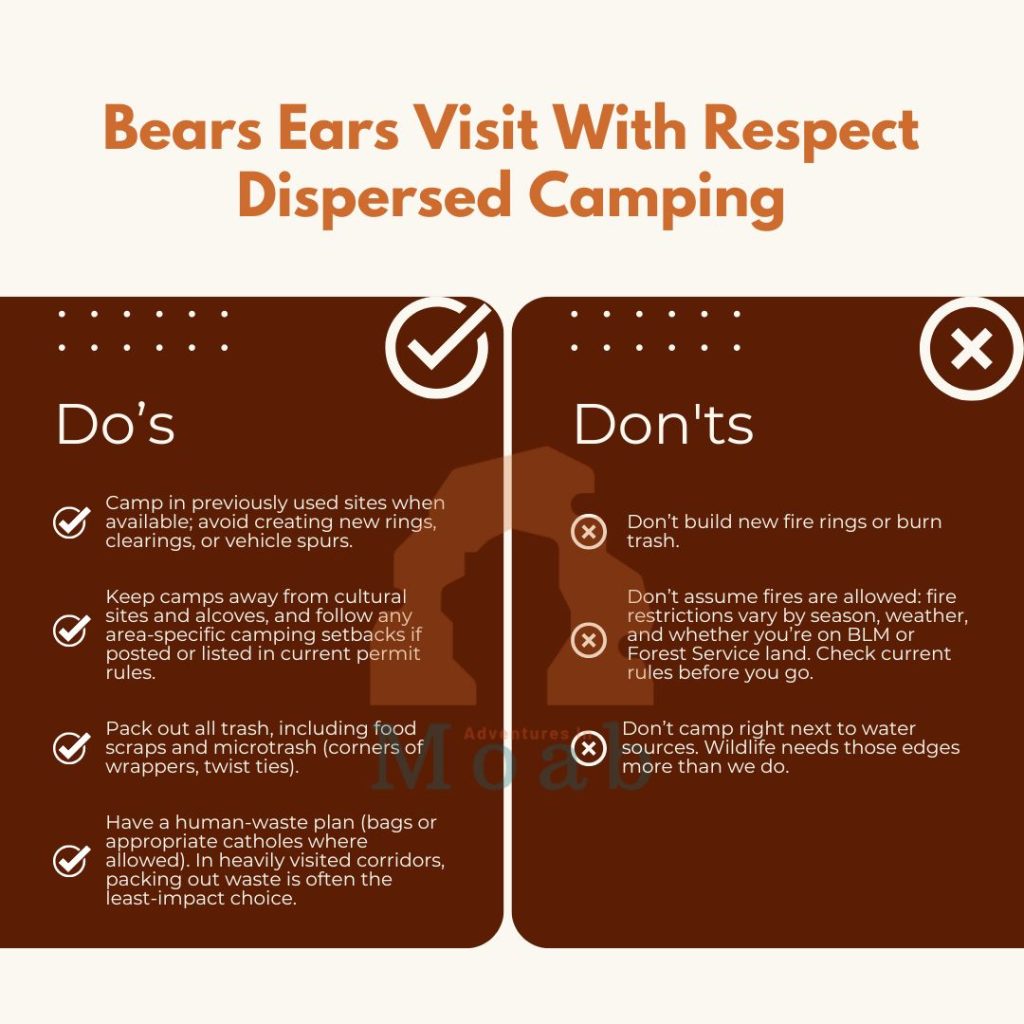
Camping, Fires, and Human Waste
Dispersed camping is part of the Bears Ears experience, but “dispersed” doesn’t mean “anywhere.” Concentrate use where it already exists, and keep impacts small.
Dogs, Wildlife, and Livestock
Bears Ears is home to wildlife and also includes areas with permitted grazing. Your choices affect animals that can’t simply “go elsewhere.”
- Keep dogs close and under control; use a leash where required and anytime you’re near other visitors, wildlife, or livestock.
- Never let pets enter structures or scramble on walls, and keep them away from rock art panels.
- Store food securely and don’t feed wildlife (even “just once” changes behavior).
Seasonal Conditions and Road Reality
This is big, remote country. Many access roads are dirt, and they can turn impassable with snow, rain, or spring thaw.
- Check forecasts, but also plan for what the road will look like after a storm.
- Carry a full-size spare, a jack that works on uneven ground, and extra water.
- Expect limited (or no) cell service. Download maps for offline use and tell someone your route.
Official “know before you go” guidance is a good starting point for current alerts and practical tips.
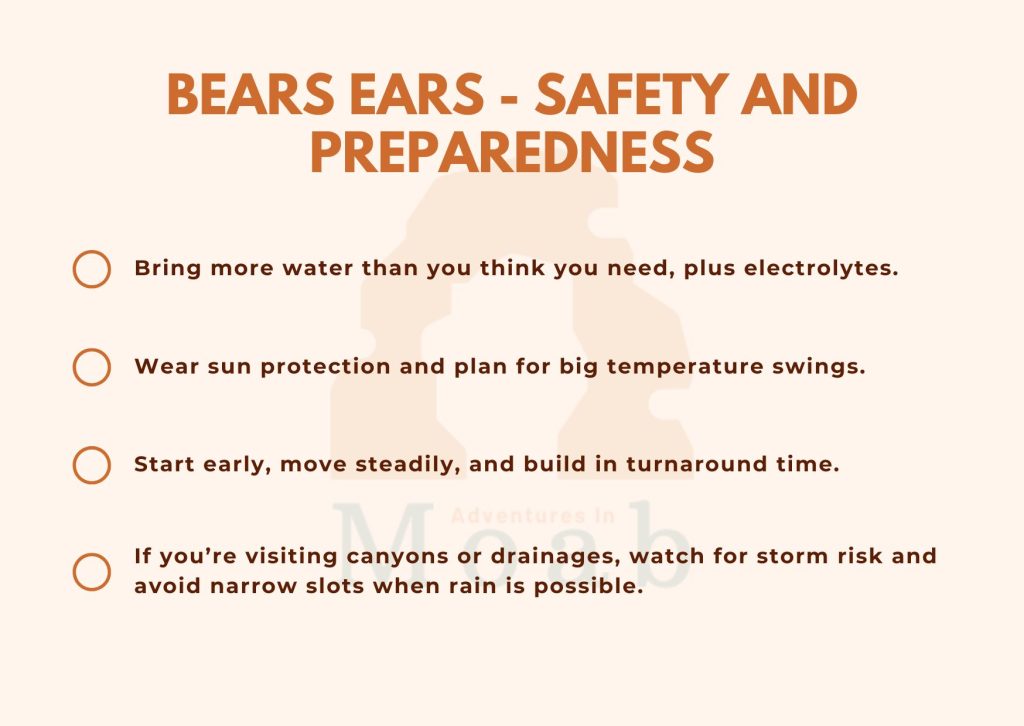
Safety and Preparedness
A respectful visit is also a prepared visit. When people get stranded or run out of water, rescue impacts the land and strains local resources.
Leave the Site Exactly How You Found It
A meaningful Bears Ears trip doesn’t require secret spots or big mileage. It comes from moving gently, keeping your hands off cultural places, staying on durable routes, and confirming current rules for your specific plan.
That’s how you Bears Ears visit respectfully while helping protect a landscape that holds irreplaceable natural and cultural resources.
Bears Ears Visit Respectfully FAQs
Is it okay to enter cliff dwellings or touch the walls to steady myself?
It’s best to stay out of structures and keep your hands off walls and rock imagery. Even light contact can damage fragile materials over time.
Do I need a permit to hike in Bears Ears?
Some areas are open for day hiking without permits, while others (especially certain backpacking routes/canyons) may require permits or fees. Check current rules with the managing agency for your exact destination.
Can I have a campfire?
Sometimes yes, sometimes no. Fire rules vary by season and by whether you’re on BLM or Forest Service land, and restrictions can change quickly. Check current fire guidance before you go.