
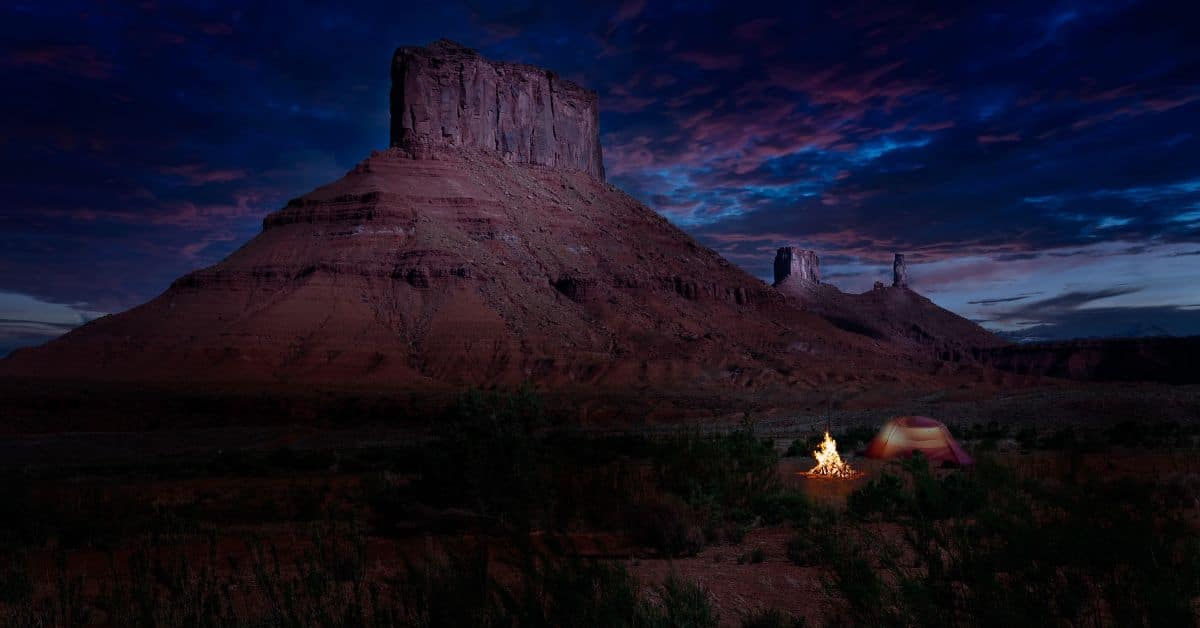
BLM Dispersed Camping in Moab: Where Legal
Planning dispersed camping in Moab trips can feel confusing because the rules change fast as you move away from town and into different management zones.
Around Moab, the Bureau of Land Management (BLM) uses a mix of developed campgrounds, designated sites, and true dispersed camping areas to protect fragile desert soils and keep heavy-use corridors from turning into sprawling camp scars.
The good news: if you understand the pattern, it’s much easier to camp legally, responsibly, and without a stressful “are we allowed here?” night.
Table of Contents
Know the Basics: Dispersed vs. Designated vs. Developed
- Developed campgrounds – These are the familiar BLM campgrounds with things like vault toilets, defined pads, tables, and often a fee station.
- Designated backcountry / designated dispersed sites – These are not full campgrounds, but you still can’t camp “anywhere.” In the Moab Field Office area, some designated backcountry campsites are marked with a tent symbol on a brown post, and camping needs to stay within the marked site boundaries.
- Dispersed camping (true dispersed) – This is camping outside developed facilities and outside designated-site zones—generally on previously disturbed sites and only where not posted closed. BLM’s general guidance is that most public lands are open to dispersed camping unless there are closures or conflicts with other uses.
The Moab reality: near popular scenic roads, rivers, trailheads, and high-traffic recreation areas, the BLM often tightens rules to designated sites only or campground-only zones due to heavy visitation.
Dispersed Camping Moab: Corridors (And Why They’re Stricter)
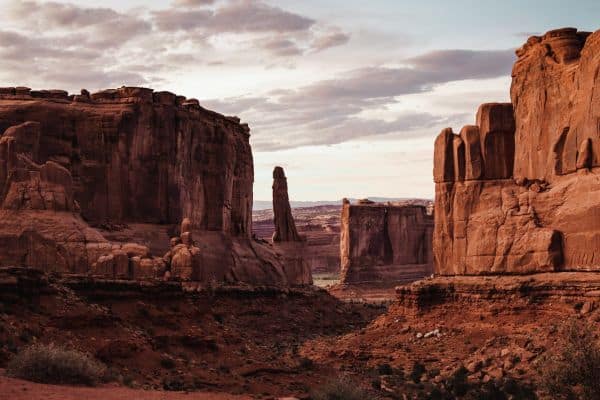
If you’ve heard people say “you can’t just pull off and camp near Moab,” they’re usually talking about camping corridors and other high-use zones.
What “Corridor Rules” Look Like in Real Life
In a corridor, camping is commonly limited to:
- Developed campgrounds, or
- Designated sites (numbered or posted), not random pullouts
Why? Corridors concentrate impact: repeated off-road pulling, illegal fire rings, trash, and crushed cryptobiotic soil add up quickly.
Typical Corridor Examples Near Moab
Moab’s most-used scenic drives often function like corridor-managed areas (with restrictions varying by segment and season). You’ll see this especially:
- Along river-access routes
- Near popular trailheads
- Near Arches-area approach roads and other high-demand recreation hubs
The Moab Field Office explicitly notes that many areas near developed campgrounds and the city of Moab are closed to dispersed camping because of high visitation.
How to Recognize a Legal Designated Site Fast
Look for:
- A brown post with a tent symbol (and sometimes a site number)
- Rock borders or a clearly hardened pad (not fresh tire tracks into open desert)
- Signs that say “camping only in designated sites” or “no camping”
If you don’t see clear site markers or you’re in a busy scenic stretch with lots of pullouts, assume you’re in a tighter-management zone until proven otherwise.
Where Dispersed Camping is Typically Legal Around Moab
The practical rule pattern around Moab is: the closer you are to town and iconic scenic roads, the more likely camping is restricted—especially on BLM land managed by the Canyon Country District and the Moab Field Office.
Here’s where dispersed camping is typically legal (not a promise—use this as a planning framework):
1) Outside “camp-only-in-campground” and “designated site zone” areas
The Moab Field Office visitor guidance describes dispersed camping as allowed outside the campground-only zone and outside designated backcountry site zones, and encourages using previously disturbed areas without expanding or creating new sites.
What “previously disturbed” means (simple version):
- You’re on a hardened surface (packed dirt, slickrock, gravel)
- The spot already looks like a campsite (existing pad, rock ring where allowed, compacted ground)
- You are not crushing vegetation or biological soil crust to “make it work”
2) Away from developed recreation sites and trailheads
BLM Utah’s dispersed camping guidance advises campers not to disperse camp in the vicinity of developed recreation sites like picnic areas, campgrounds, or trailheads.
3) Accessed by designated routes, not new tracks
BLM Utah also emphasizes: only travel on designated routes—a major point in the Moab area where new spur tracks quickly become permanent damage.
4) Time limits apply
Stay limits commonly apply across BLM lands. General BLM guidance describes dispersed camping as usually limited to 14 days within a 28-day period (local rules can differ).
Moab-specific visitor guidance also states camping on public land is limited to 14 days at a single location, then you must relocate at least 30 miles away.
Closures, Seasonal Restrictions, and the Verify-Before-You-Go Step
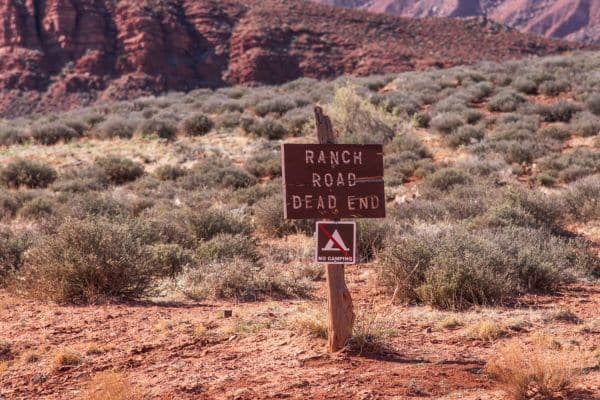
Moab-area camping regulations aren’t static. Even if a spot was “fine last year,” it may be posted closed now due to resource damage, restoration work, wildlife concerns, crowding, or fire risk.
Temporary and seasonal closures happen
Expect the BLM to use:
- Signed closures (fenced rehab areas, “closed to camping” corridors)
- Seasonal restrictions (sometimes tied to soil conditions, wildlife, or visitation)
- Area-specific rules that override general BLM dispersed camping guidance
Fire restrictions change the fastest
Fire restrictions can escalate quickly. BLM Utah guidance points visitors to Utah Fire Info for current restrictions.
BLM also maintains a national fire restrictions page and notes restrictions/closures may be used to reduce wildfire risk.
Verify before you go (do this every time)
Before you drive out:
- Check the BLM Moab Field Office page for local updates and contacts.
- Check current fire restrictions (especially in late spring through fall).
- If you’re unsure on the ground, don’t gamble: move to a clearly legal established site or developed campground.
How to Choose a Legal Spot (Simple Heuristics)
Use this quick on-the-ground method to find a legal dispersed site without overthinking it.
The “3-Signals” Test
A spot is more likely to be legal if:
- You’re outside a corridor / closed zone (no “no camping” or “designated sites only” signs)
- It’s already disturbed (obvious existing campsite pad; you’re not creating something new)
- Access is via a designated route (no fresh two-tracks cutting into crust)
If any one of those fails, keep driving.
A Practical Camper Checklist (Moab Edition)
Vehicle & access
- High clearance helps; 4WD is situational but common on rougher BLM roads.
- Don’t drive off-route to “improve” a spot.
- Have a turnaround plan: narrow roads + soft sand = easy stuck.
Water
- Bring more than you think (desert air dehydrates fast). Plan for drinking, cooking, and a small cleanup buffer.
- Don’t count on campground taps; many sites have no water.
Toilets & waste
- In the Moab area, portable toilet systems are required for public land users where no toilet is available (per Moab visitor guidance).
- Pack out all trash (including micro-trash).
Campfires & stoves
- Know the current fire restrictions before lighting anything.
- Use existing fire rings where allowed; consider a stove instead.
- Never leave a fire unattended; drown/stir until cold.
Permits (when they might apply)
- Many dispersed areas don’t require a permit, but some river or special-use zones may. When in doubt, check with the Moab Field Office.
Quiet hours & etiquette
- Noise carries in slickrock bowls and canyon walls. Be the neighbor you’d want.
- Keep groups compact; don’t “annex” extra pads.
- Respect private inholdings and signed boundaries.
LNT (Leave No Trace) in Moab’s Desert
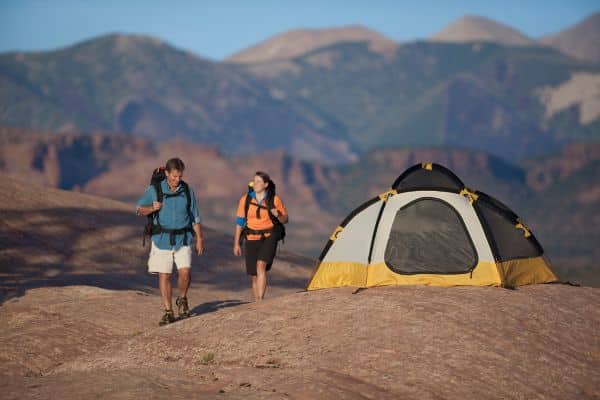
Moab’s desert is beautiful because it’s fragile. The fastest way to get areas shut down is repeated impact from a few avoidable mistakes.
Human waste: treat it as pack-out country
Moab-area guidance calls for portable toilet systems where toilets aren’t available, and reminds visitors to pack out waste responsibly.
Practical tips:
- Bring a reliable system (hard-sided, wag bags used correctly, or another approved portable setup).
- Don’t stash waste in fire rings, under rocks, or in random bags.
- Never bury toilet paper in desert soil—it resurfaces.
Cryptobiotic soil: don’t step on the living crust
That bumpy, dark “crunchy” ground is biological soil crust. It prevents erosion and helps plants survive. One footprint can last for years.
- Walk on slickrock, washes (when appropriate), or durable surfaces.
- Park and pitch only on hardened, previously used pads.
Campfire impacts: less is more
- If fires are allowed, keep them small and only in existing rings.
- Better: use a stove and skip the scar.
- Don’t burn trash (foil, cans, plastics). It doesn’t “disappear” here.
Trash and micro-trash
Desert wind scatters everything.
- Do a 2-minute sweep before bed and before leaving.
- Pack out bottle caps, twist ties, food scraps, and cigarette butts.
Pet waste
- Pick it up, pack it out, or dispose of it properly (same logic as human waste in high-use areas).
- Keep pets from trampling crust and harassing wildlife.
Conclusion
The big takeaway for dispersed camping in Moab planning is that legality often hinges on where you are: corridors and high-use zones tend to be campground-only or designated sites only, while true dispersed camping is typically found farther out, on previously disturbed ground, accessed by designated routes, and outside posted closures.
Stay within stay limits, manage waste responsibly, and treat cryptobiotic soil like the living resource it is. And always verify before you go by checking the latest Moab Field Office updates and current fire restrictions—those two steps prevent most camping problems before they start.