
Moab in October: A 12-Part Series
Planning a trip to Moab in October means dealing with a desert that changes fast from season to season. Weather, crowd levels, trail conditions, and even park rules can look completely different depending on when you visit. This 12-Part Series breaks down what Moab is really like month by month so you can plan with confidence instead of guesswork.
Below you’ll find practical details on weather, what’s open, photography conditions, and how these factors shape your time in the parks. Whether you’re chasing sunrise light in Arches or heading out for longer hikes in Canyonlands, this month-specific guide gives you a clear picture of what to expect and how to make the most of your trip.
Table of Contents
Moab in October
Moab in October is fall at its finest. Cool mornings, crisp evenings, golden cottonwoods, and clear light make this one of the premier months for photographers and hikers.
Weather in October
Average highs in October drop into the low 70s °F, with lows in the high 30s to low 40s °F. Rain chances rise slightly, with occasional fall storms bringing wind and cooler days.
Daylength continues to shorten, making early starts less punishing and evenings cozier.
- Hiking: Ideal conditions for most trails.
- Driving: Roads dry most of the time, with occasional wet periods after storms.
- Photography: Very favorable, with lower sun angles and fall color.
What’s Open in October
October is still full season, but the timed entry clock is ticking.
- Arches: Timed entry remains in effect between 7 am and 4 pm through October 31.
- Canyonlands: All districts open, extremely popular in October for cooler backpacking and long hikes.
- State parks and town: Full services, some last big events before the late fall quiet.
Crowd Levels in October
Moab in October is busy, often rivaling April and May.
- Fall color along the Colorado River and in cottonwood lined canyons draws extra photographers.
- Weekends can be very busy, especially around fall breaks.
Photo Plan for Moab in October
October is one of the best months for a dedicated photo trip.
Key October subjects
- Fall color along the Colorado River
- Cottonwoods turn gold along Highway 128 and 279.
- Use river reflections for color studies.
- Low sun and rich canyon light
- Rim overlooks and canyon trails glow with warm light on clear days.
- Transitional night skies
- Milky Way core sets earlier, but you still have good opportunities early in the month. Later in October, focus on constellations and starry sky landscapes.
Daylight plan for Moab in October
- Sunrise:
- River corridors for reflected fall color.
- Mesa Arch or Grand View Point for classic canyon scenes in cooler air.
- Daytime:
- Long hikes such as Chesler Park, Syncline Loop, or extended Devils Garden become very comfortable.
- Use late morning and early afternoon for hiking, when the air is mild.
- Sunset:
- Delicate Arch, Dead Horse Point, or cottonwood lined stretches of the river.
- Night:
- Earlier nights make it easier to fit in some star photography without sacrificing too much sleep.
Recommended gear
- Standard landscape kit with tripod
- Polarizer for managing glare on colorful foliage and water
- Telephoto lens for isolating patches of color in the river corridor
- Warm layers for dawn and night
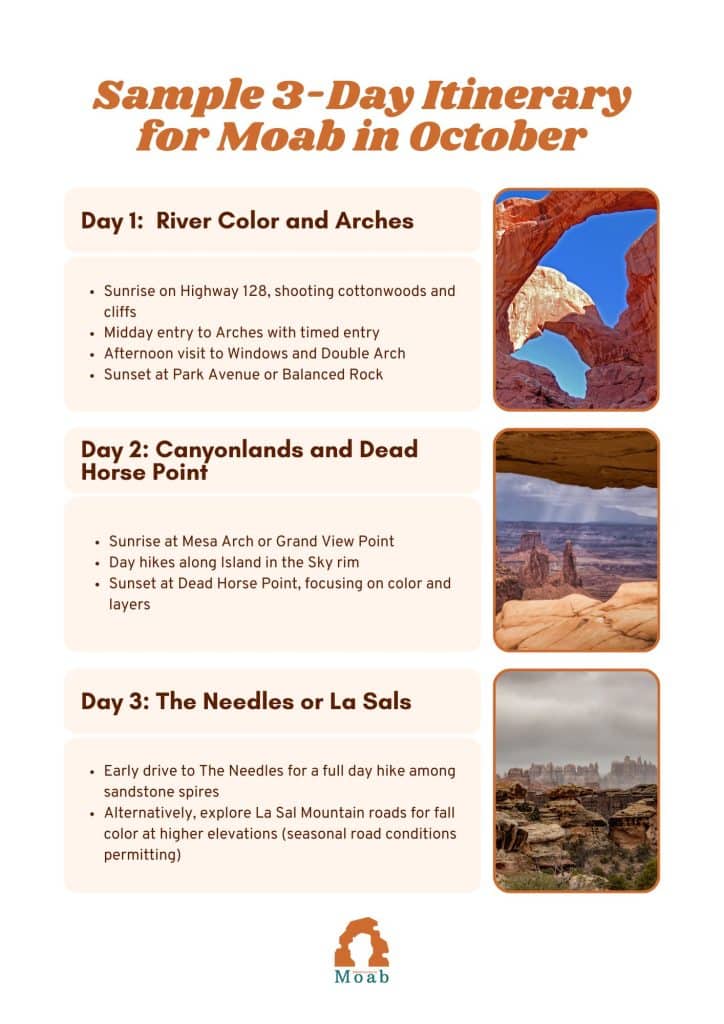
Sample 3-Day Itinerary for October
Packing and Gear List for October
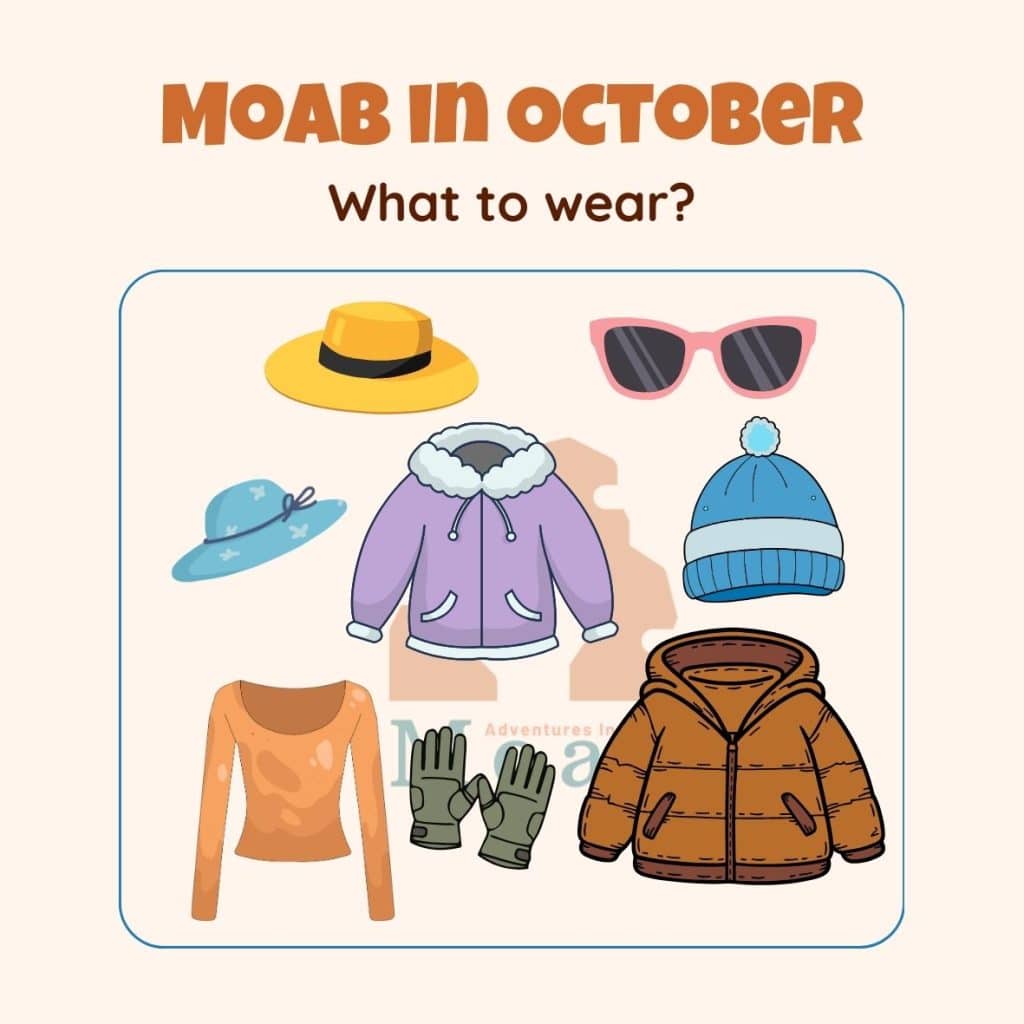
- Layered clothing from 30s to 70s °F
- Warm hat and gloves
- 2 to 3 liters of water capacity (still drink plenty even in cool weather)
- Rain shell for fall storms
Safety and Road Conditions in October
- Fall storms can bring strong winds and cold rain. Bring rain gear and a warm layer even on seemingly mellow days.
- Days are shorter. Start long hikes early enough to finish before dark, or carry headlamps and navigation tools.
- As temperatures drop, icy patches can begin forming in shaded areas after wet days, especially late in the month.
Visit Moab in October
Visiting Moab in October comes with its own mix of challenges and rewards, and knowing what the month brings helps you travel smarter, safer, and with better photos to show for it. Use this guide as your starting point, then build an itinerary that matches your comfort level, the weather, and the type of adventure you want most.
If you’re still deciding when to visit, or you want to compare conditions across the seasons, check out the other articles in the series. Each guide breaks down the same key details so you can quickly see how the desert shifts from winter to spring, summer, and fall. Exploring a few different months will help you pick the perfect time for your next Moab trip.
If you’re still choosing the perfect season for your trip, take a look at the other guides in this series.