
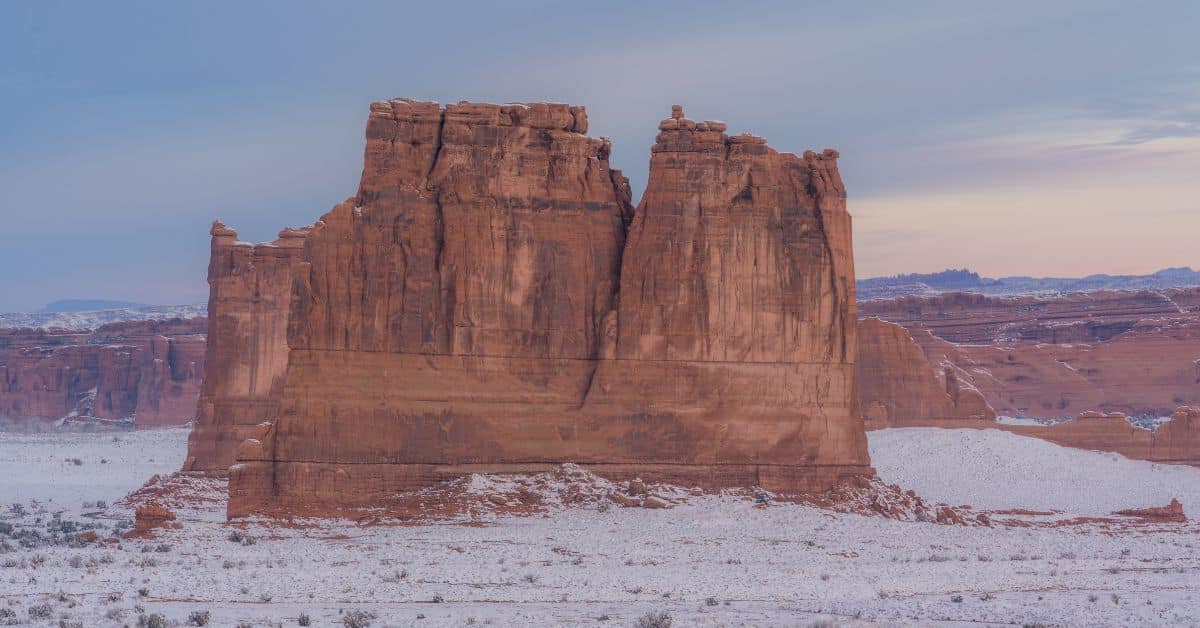
Moab in February: A 12-Part Series
Planning a trip to Moab in February means dealing with a desert that changes fast from season to season. Weather, crowd levels, trail conditions, and even park rules can look completely different depending on when you visit. This 12-Part Series breaks down what Moab is really like month by month so you can plan with confidence instead of guesswork.
Below you’ll find practical details on weather, what’s open, photography conditions, and how these factors shape your time in the parks. Whether you’re chasing sunrise light in Arches or heading out for longer hikes in Canyonlands, this month-specific guide gives you a clear picture of what to expect and how to make the most of your trip.
Table of Contents
Moab in February
Moab in February is still winter, but the light starts to shift and days grow a little longer. For adventure travelers and photographers, it is a great combination of quiet parks and the first hints of the coming spring.
Weather in February
In February, average highs climb to the low 50s °F and lows hover in the mid 20s °F. Snow is still possible, especially early in the month, but dry, bright days are common.
You will get around 10.5 to 11 hours of daylight. Winds pick up occasionally, which can increase wind chill and blow dust after dry spells.
How this impacts your experience:
- Trails: South facing slopes begin to melt out, while shaded canyons can hold ice.
- Driving: Paved roads are usually dry, with occasional icy patches after storms.
- Photography: The sun stays low enough to keep contrast manageable for much of the day.
What’s Open in February
Most of what you enjoyed in January remains open in February.
- Arches: Open 24 hours with no timed entry reservations typically required in February. All the headline trails are generally accessible, with short weather related closures possible.
- Canyonlands: Island in the Sky and The Needles districts are open. Visitor centers may still be on winter schedules with reduced hours. Expect some snow or ice on trails like Upheaval Dome or Syncline Loop.
- Backcountry roads: White Rim Road, Elephant Hill, and other 4WD routes can be deeply muddy, snowy, or closed. Check for day use permits and current road conditions before committing.
- Town and tours: More outfitters begin ramping up operations as Presidents Day weekend approaches, including off road tours, scenic flights, and some river trips if conditions allow.
Crowd Levels in February
Moab in February is a classic shoulder within the off season.
- Early February is often as quiet as January.
- Around Presidents Day and some school breaks, you will notice a bump in visitation.
- Lodging deals are still common, especially midweek.
Because the big spring surge has not yet arrived, you can still enjoy iconic locations without significant crowds, particularly at sunrise and sunset.
Photo Plan for Moab in February
February is about changeable skies and flexible plans. You might have bluebird days, fog in canyons, or fresh snow on the La Sal Mountains.
Key February photo targets
- Contrast of winter and hint of spring
- La Sal Mountains often carry heavy snow while red rock is drying out. Use telephoto lenses from Island in the Sky, Dead Horse Point, and the Windows Section to compress snowy peaks behind warm sandstone.
- Patterns in snow and mud
- Potholes, fins, and slickrock hold thin patches of snow or ice that create graphic patterns. Devils Garden, the Fiery Furnace viewpoint, and Sand Dune Arch area work well.
- Night photography
- The Milky Way core begins to make very early morning appearances late in the month. Plan pre dawn sessions if you are keen, or stick to star trails and constellations.
Daylight plan for Moab in February
- Sunrise:
- Dead Horse Point for soft morning glow on the Colorado River.
- Balanced Rock and the Windows for simple access on possibly icy mornings.
- Midday:
- Explore Park Avenue or hike part of Devils Garden once surfaces soften.
- Visit Canyonlands overlooks when side light brings out canyon texture.
- Sunset:
- Delicate Arch for classic silhouettes.
- Green River Overlook or Grand View Point for layered canyon scenes.
Recommended Gear
Same kit as January, plus:
- Graduated ND filters if you prefer balancing bright skies without bracketing
- Lens cloths, since snow and slush can leave spots
- Small sit pad so you can kneel or sit on cold rock while waiting for light
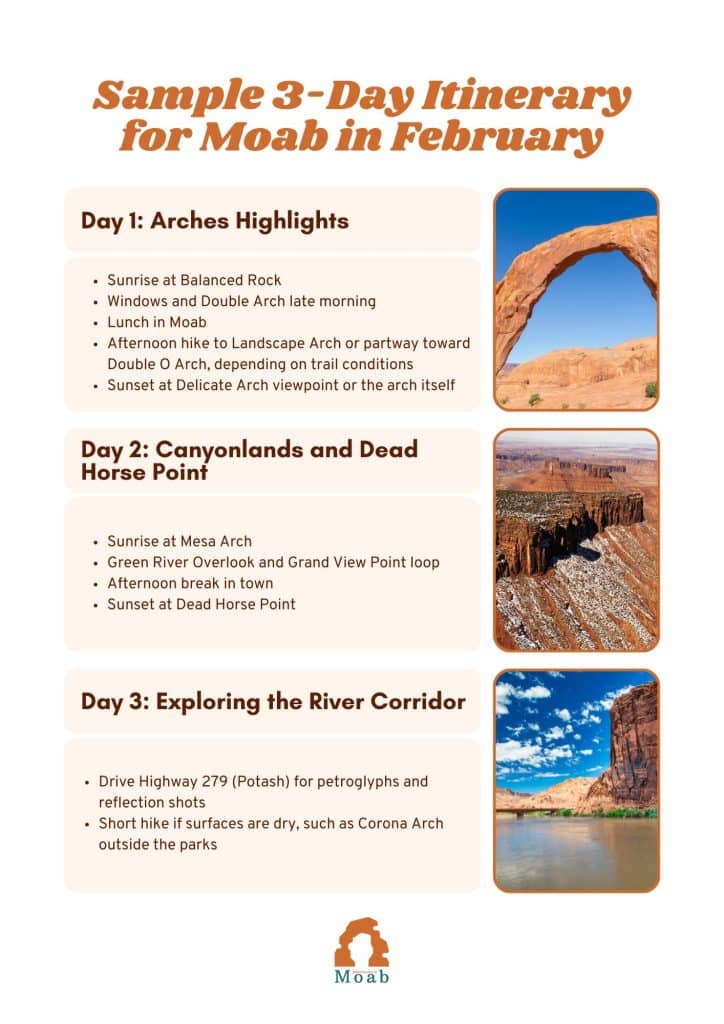
Sample 2 to 3 Day Itinerary for February
Packing and Gear List for February
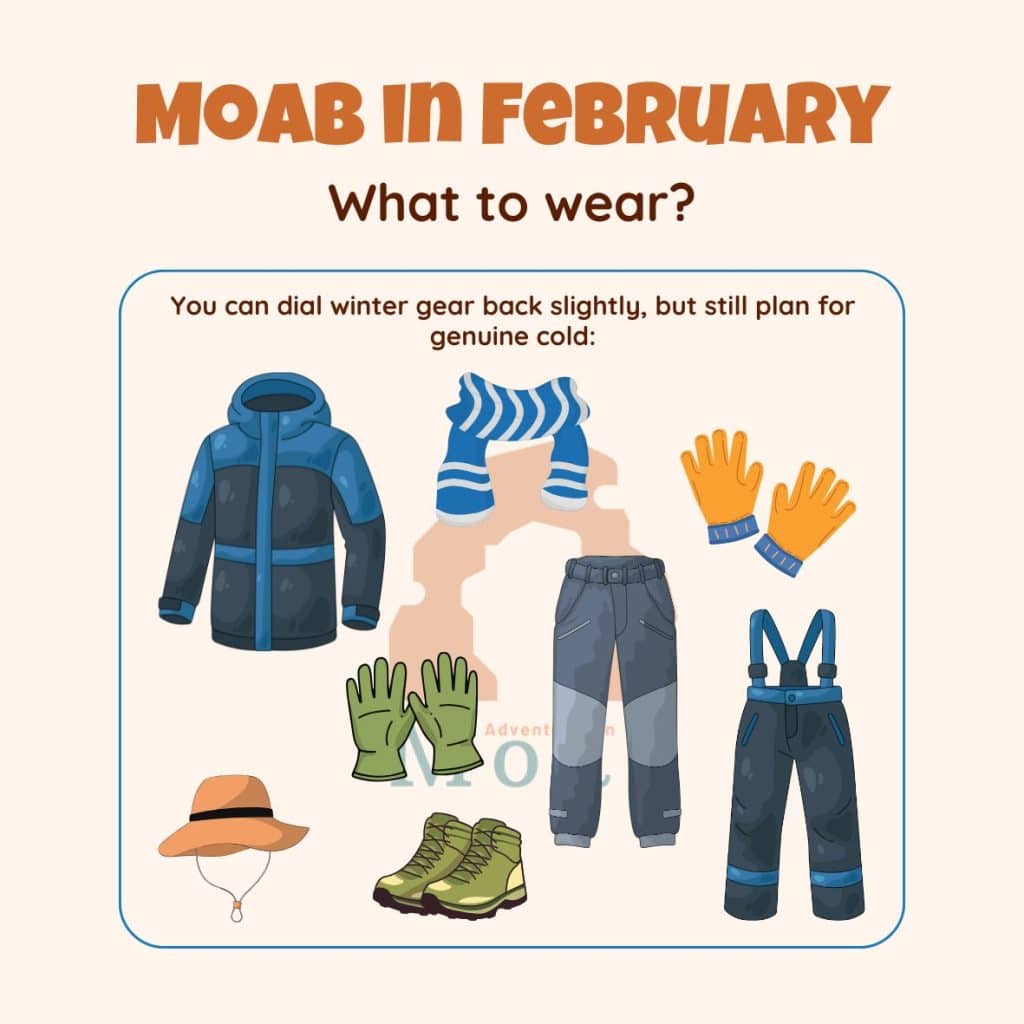
- Winter plus shoulder season layers
- Light traction devices
- Waterproof shell in case of late storms
- Sunglasses, sunscreen, and lip balm (winter sun is still strong at altitude)
- Plenty of water, even if you do not feel hot
Safety and Road Conditions in February
- Watch for freeze thaw cycles that create black ice and soft mud on the same day.
- Never drive unpaved backcountry roads after recent snow or rain without current information and proper 4WD.
- Days are getting longer, but it is still easy to underestimate how quickly it gets cold after sunset. Pack extra layers for evening shoots.
Visit Moab in February
Visiting Moab in February comes with its own mix of challenges and rewards, and knowing what the month brings helps you travel smarter, safer, and with better photos to show for it. Use this guide as your starting point, then build an itinerary that matches your comfort level, the weather, and the type of adventure you want most.
If you’re still deciding when to visit, or you want to compare conditions across the seasons, check out the other articles in the series. Each guide breaks down the same key details so you can quickly see how the desert shifts from winter to spring, summer, and fall. Exploring a few different months will help you pick the perfect time for your next Moab trip.
If you’re still choosing the perfect season for your trip, take a look at the other guides in this series.