
Moab in January: A 12-Part Series
Planning a trip to Moab in January means dealing with a desert that changes fast from season to season. Weather, crowd levels, trail conditions, and even park rules can look completely different depending on when you visit. This 12-Part Series breaks down what Moab is really like month by month so you can plan with confidence instead of guesswork.
Below you’ll find practical details on weather, what’s open, photography conditions, and how these factors shape your time in the parks. Whether you’re chasing sunrise light in Arches or heading out for longer hikes in Canyonlands, this month-specific guide gives you a clear picture of what to expect and how to make the most of your trip.
Table of Contents
Moab in January
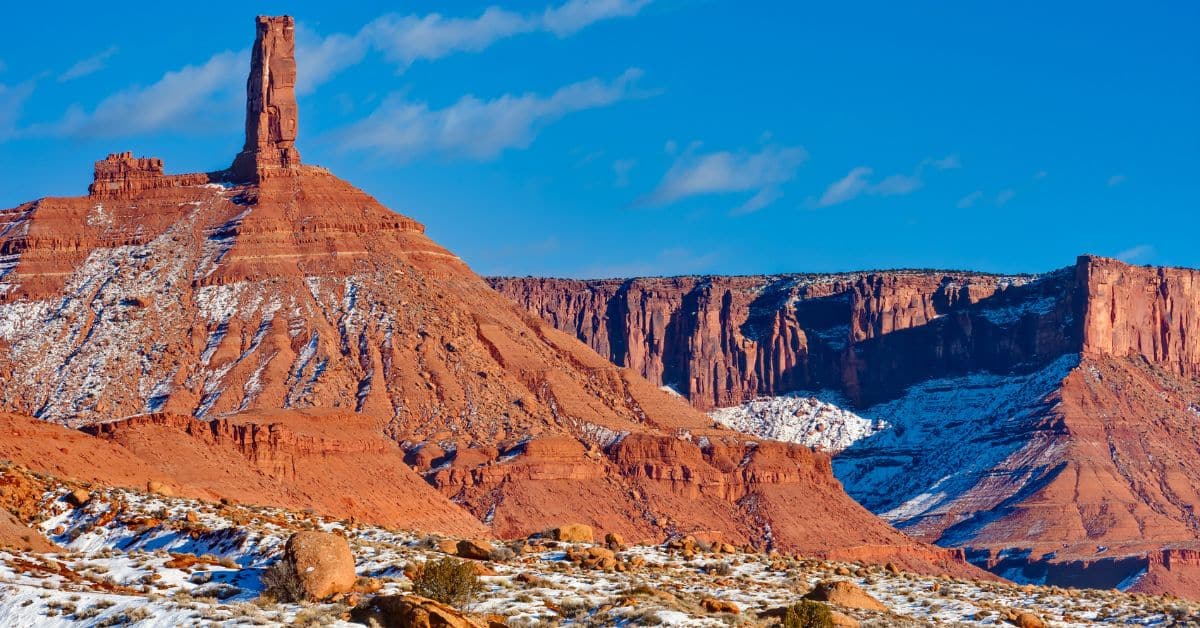
Moab in January is quiet, cold, and beautiful. If you like empty trails, moody skies, and the chance of snow on red rock, this is your month.
Weather in January
January is the coldest month of the year in Moab. Expect average highs around 40 to 41 °F and lows near 17 to 20 °F. Snow is possible, and small storms can quickly turn the sandstone slick and icy.
Daylight is limited. You will get roughly 9.5 to 10 hours of usable light, and the sun stays low in the sky, which is great for soft side light on the rocks. Winds are usually light to moderate, but cold north winds can make it feel much colder than the thermometer suggests.
How this affects your trip:
- Hiking: Many main trails are open, but shaded sections, rock steps, and ledges can be icy all day.
- Driving: Main paved roads are usually clear soon after storms, but bridges and shaded curves can be slick. Unpaved roads can be muddy or closed.
- Photography: The low sun angle gives you “golden hour” style light almost all day.
What’s Open in January
The Moab area and both national parks stay open through winter.
- Arches National Park: Open 24/7, and in January there is typically no timed entry system. The main park road, Windows, Delicate Arch, and Devils Garden trailheads are usually accessible. After snow, sections may close briefly for plowing.
- Canyonlands (Island in the Sky and The Needles): Open year round. Visitor centers may operate on reduced hours or close some weekdays in winter. Paved scenic drives usually reopen quickly after storms. Unpaved backcountry roads can be impassable for days.
- State parks and scenic drives: Dead Horse Point State Park is open, with winter conditions similar to Island in the Sky. Highway 128 and 279 river roads are plowed but can have icy shaded sections.
- Town services: Moab in January is sleepy. Many restaurants and tour operators take seasonal breaks, but you will still find enough open for food, lodging, and basic tours.
Crowds are at their lowest. You will share sunrise at Mesa Arch or Delicate Arch with a handful of hardy photographers rather than hundreds.
Crowd Levels in January
Moab in January is the true off season. Winter is the only time Moab feels “empty” compared with the March to October rush.
- Parking is easy, even at iconic trailheads.
- Lodging prices are significantly lower than spring and fall.
- You may need to plan around shorter business hours in town.
If you are an introvert or a photographer who loves clean frames without people, this is your moment.
Photo Plan for Moab in January
January rewards patient photographers with quiet scenes and dramatic skies.
Best January Subjects
- Snow on red rock
- Windows Section and Turret Arch in Arches
- Park Avenue and Courthouse Towers
- Dead Horse Point overlook with frosted canyons
- Soft winter light on canyons
- Island in the Sky overlooks such as Grand View Point and Green River Overlook
- Murphy Point for late light
- Night skies – The Milky Way core is not visible, but you can still shoot star fields and constellations over arches and fins. Arches and Canyonlands are International Dark Sky Parks.
Daylight pan for Moab in January
- Sunrise:
- Mesa Arch (Canyonlands) for classic sunstar shots. Arrive at least 45 to 60 minutes before sunrise, even in winter.
- Windows Section for soft pink alpenglow on La Sal Mountains.\
- Midday:
- Explore slot-like canyons like Park Avenue and the fins in Devils Garden. The low winter sun helps avoid harsh overhead light.
- Sunset:
- Dead Horse Point for sweeping canyon views.
- Delicate Arch for pastel skies and possible snow contrast. Bring a headlamp for the hike out.
Recommended Photo Gear
- Wide zoom, around 14 to 24 mm or 16 to 35 mm, for arches and night skies
- Standard zoom, 24 to 70 mm, for flexibility on viewpoints
- Telephoto, 70 to 200 mm, for canyon layers and compressed La Sal backdrops
- Solid tripod, remote or 2 second timer
- Circular polarizer to manage glare on snow and rock
- Extra batteries, kept in an inner pocket so they do not die in the cold
Safety for Photographers
- Icy ledges at Delicate Arch, Mesa Arch, and slickrock domes can be treacherous. Stay back from edges when conditions are slick.
- Do not step on cryptobiotic soil crusts between rock slabs. Stick to durable surfaces.
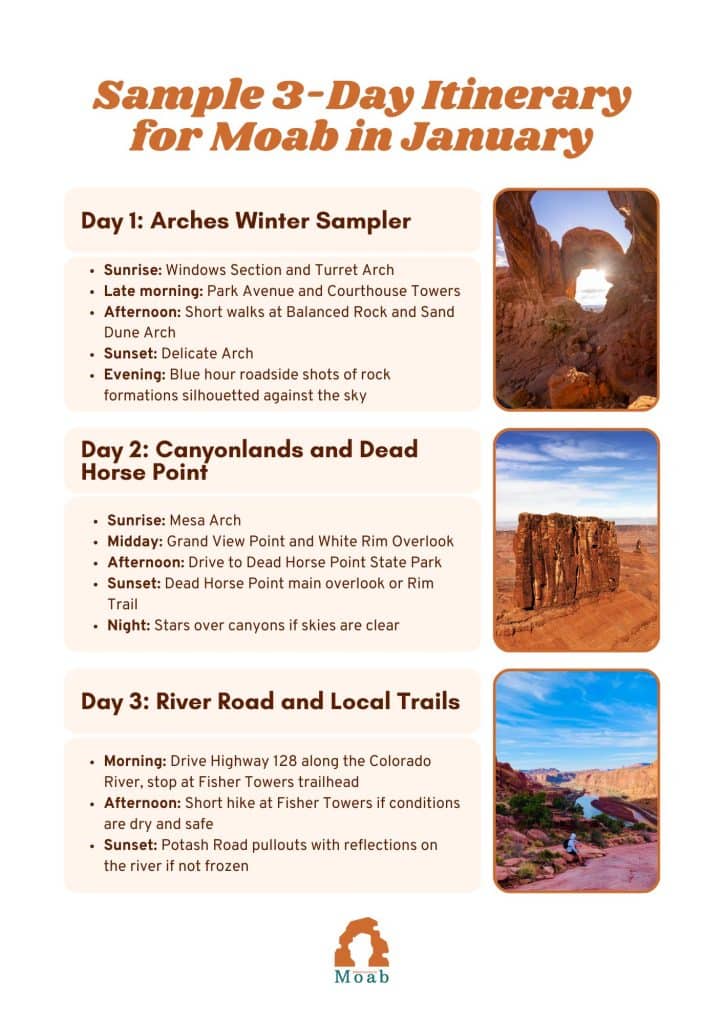
Sample 3-Day Itinerary for Moab in January
Packing and Gear List for January
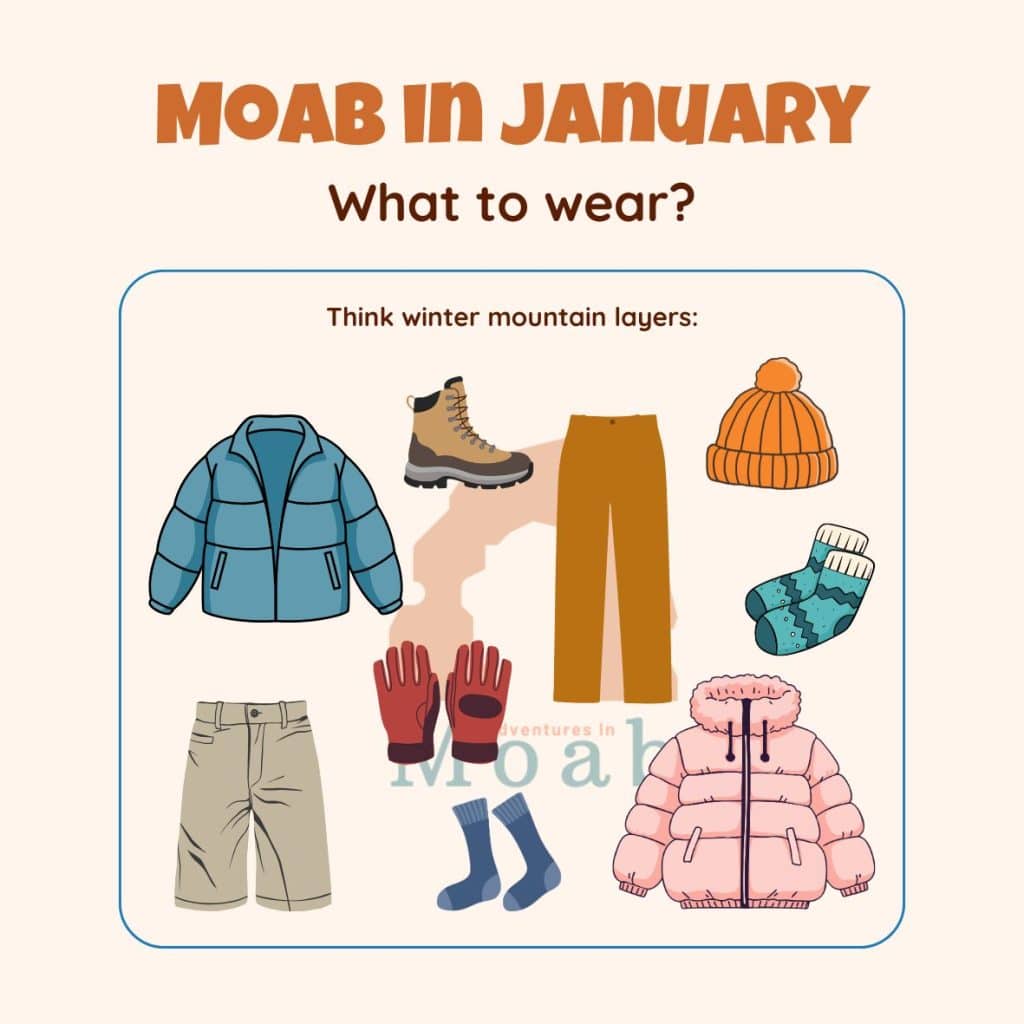
- Warm winter layers listed above
- Microspikes or similar traction
- Thermos, insulated water bottles (liquids can freeze in standard bottles)
- Hand warmers for you and your batteries
- Headlamp with fresh batteries
- Paper map and downloaded offline maps
Safety and Road Conditions in January
- Check Arches and Canyonlands road conditions and alerts before you drive into the parks.
- Avoid unpaved roads such as Shafer Trail, White Rim Road, or Elephant Hill unless you have true high clearance 4WD, winter driving skills, and the proper permits.
- Black ice can form on bridges and shaded sections even on sunny days.
- Always tell someone your plans and carry more food, water, and warm clothing than you think you need. Cell service is limited in the parks.
Visit Moab in January
Visiting Moab in January comes with its own mix of challenges and rewards, and knowing what the month brings helps you travel smarter, safer, and with better photos to show for it. Use this guide as your starting point, then build an itinerary that matches your comfort level, the weather, and the type of adventure you want most.
If you’re still deciding when to visit, or you want to compare conditions across the seasons, check out the other articles in the series. Each guide breaks down the same key details so you can quickly see how the desert shifts from winter to spring, summer, and fall. Exploring a few different months will help you pick the perfect time for your next Moab trip.
If you’re still choosing the perfect season for your trip, take a look at the other guides in this series.